
This is a “script” generated by Google Gemini after it was given the original transcript from the YouTube audio. You may listen to the live study as originally presented here:
Romans 1:26-27: The Bible and Homosexuality
Fairview Baptist Tabernacle Church, Sweetwater, TN Wednesday Evening Service | February 18, 2026 Speaker: Steve Hall
Opening Remarks and Church Life
Well, good evening. It is good to have you here tonight. We will be praying for Jason and the kids; they are all meeting over in the auditorium. He is sharing at what they call the Upward commencement—or is it “Celebration”? Whatever they call it, that is what they are doing tonight. They have the big meeting over there, so I am sure it will be a good experience for them. He asked me if I would lead tonight so he could do that, and I am very honored and thankful that he would ask me to do this.
We need to have some prayer requests, and we certainly need to pray for them. We also have a dear sister in the Lord that you probably do not know who went home to be with the Lord this week from our previous church, Sevier Heights. There was a couple in that church who were in our class. As you know, I am from Tellico Plains. The first Sunday we went up there and went to Bible study, the guy heard our name, looked at me, and said, “I know you.” I said, “I don’t think so. I’m from Tellico Plains.” He said, “So am I.” He had graduated a couple of years before I did; he is an old Tellico boy. Anyway, his wife of many, many years went to be with the Lord this week, and it was a tough time. We got to spend some time with him, but I know he appreciates your prayers. His name is Don Morris; please pray for him.
Global Persecution and the Cultural Climate
We also need to pray for Christians around the world. We need to keep praying because things are getting worse and worse, as we know. There is heavy persecution in Nigeria; we do not want to forget the Nigerian Christians. I read just last week that sixty more Christians had been kidnapped, and who knows what will happen to them now, but it is just awful.
Then, did you hear about this situation in Brazil? This Isadora Burgess—you know what I am talking about. There is a lady in Brazil who is a veterinary school student, and she posted on X (Twitter, as we used to call it). In fact, I put it on my phone this time so I can read it to you. She made a comment that transgender women were obviously born male. She made another comment that said, “A person who identifies as transgender retains their birth DNA. No surgery or synthetic hormone or clothing change will change this fact.”
All right, that is obviously true. Yet, they arrested her for “transphobia.” The courts there have decided it is illegal to be transphobic; they equate it with racism. Oh my goodness! She is criminally charged, and if she is found guilty, she could serve up to ten years in prison. It’s crazy. It’s amazing. It really is demonic; that is exactly what it is.
We need to pray for Christians around the world. We may find ourselves dealing with stuff like that before it is over, too. Some Christians already are. Of course, I want to talk about some of that tonight.
Congregational Prayer Requests
Is there anything else you want to mention before we pray?
- Member: “I’ve got back surgery Monday.”
- Steve Hall: Monday. Okay. Well, if yours turns out as good as Allen’s did, that would be great. We will be praying for that. We’ll pray for you, Dale. Anything else?
- Member: “Yes, sir. We got some friends down here at the church. Actually, he was our Sunday school teacher. His wife went to be with the Lord last week.”
- Steve Hall: Okay. John Shaw. We will pray for him too. Thank you, Hugh. Millington… that’s over there by Memphis, isn’t it? Where the base is? All right. Anything else before we pray?
Opening Prayer
Father, thank You so much for this privilege of being here tonight. Thank You that You are here. You are always here with us; You never leave us, and we thank You for that. Lord, we thank You that when we get together in Your name, You are ready to teach us, bless us, direct us, and guide us.
Lord, I pray that tonight would be a time of equipping. I know there will be many people in the room who will already be familiar with these things, but I pray it will be a good review and a time of equipping as we try to get ready to deal with this kind of stuff we are going to be dealing with in the future in our own culture.
Lord, we do pray for our brothers and sisters here in America, of course, but also around the world. We think of our Nigerian brothers and sisters, Lord, suffering so much. So many have been killed, kidnapped, and treated so brutally. We pray, Lord, that You would protect them, preserve them, and give them the courage, grace, strength, and wisdom they need. Lord, I pray that You would somehow raise up protection for them.
We pray for Isadora Burgess in that situation in Brazil. We pray that You would maybe use that to help other people around the world realize how foolish this has gotten, how extreme it has gotten, and how demonic it has gotten. Lord, I pray for her and her legal representation.
Lord, we pray for our pastor. We thank You so much for Jason. You have used him to bless us; every time he speaks, You speak through him to teach us and help us so that we have an opportunity to grow. We pray that You would use him tonight over there with those kids. We thank You so much for Upward and everyone who participates and makes it possible. We know it is a powerful ministry where many lives are touched. We pray that the culmination of this year’s Upward would be powerful tonight. Be in their midst; work in the lives of the kids and adults, and help Jason to say exactly what You want him to say. Get glory through him.
Lord, we pray for Dale as he has back surgery coming up. I pray that the doctors would be expertly perfect, that everything would go exactly the way it is supposed to go, and that You would give him healing, take away pain, and give him relief. Be merciful to him. Thank You for the skill of the doctors involved and for how You took care of Allen with his surgery earlier.
Lord, we pray for Hugh’s friend and former Sunday school teacher, John Shaw, and also our friend Don Morris. Lord, as they deal with grief and a new kind of life with their spouses gone to be with You, it has to be really, really tough. We pray that You would be merciful to them and give them godly friends to encourage them and help them get through one day at a time. Give them the grace they need until it is time for them to go home, too. Let them sense Your presence specially.
Lord, I thank You for this opportunity to share tonight. I pray You would help me share with clarity and that Your truth would come through well. Again, I pray that we could all be better equipped to serve You and represent You well in this “Genesis 3” culture we are in. It is such a mess these days, Lord. Such a mess.
We know the time comes when we have to take a stand and answer questions. I pray that when that time comes, You will bring back to memory things like we are going to study tonight so that we can share and help people see Your truth. We want to stand firm in Your truth. Please help us, be in charge of us, and teach us tonight. We pray in Jesus’ name, Amen.
The Clarity of God’s Word
All right. Let’s see—this is God’s Word:
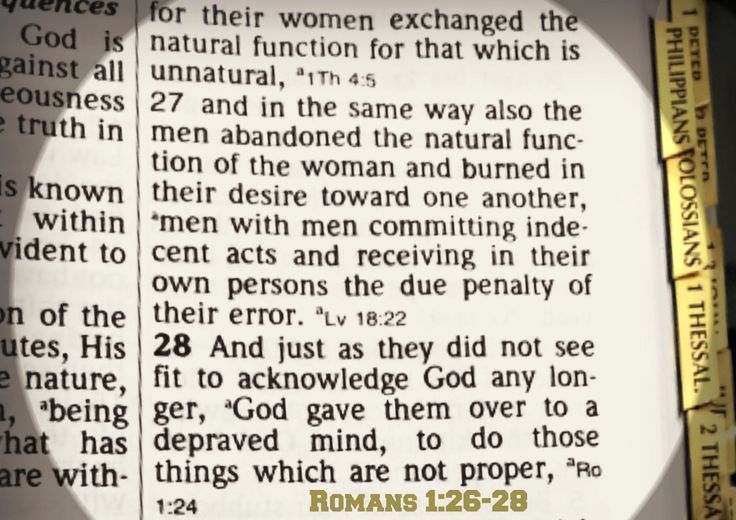
“For this reason God gave them up to dishonorable passions. For their women exchanged natural relations for those that are contrary to nature. And the men likewise gave up natural relations with women and were consumed with passion for one another, men committing shameless acts with men and receiving in themselves the due penalty for their error.” (Romans 1:26-27)
This is God’s Word, and these verses are very, very clear. God tells us that lesbianism and homosexual behavior are contrary to nature and contrary to His Word.
But we are living in a time today, guys, just as Paul was in the first century, when people who wish to indulge in this kind of behavior are claiming that it is just who they are—that it is just part of their identity. It is a tactic used by the leaders of the sexual revolution, and they are going full steam ahead. They are not letting up; if they lose a little battle here and there, they just go full steam ahead, stronger than ever.
The Identity Trap
If they can persuade people that it is part of their identity—that it is “just who they are”—then they have the grounds, from their perspective, to force acceptance of that behavior on the culture at large. They believe everyone just has to accept it because, as they say, “If you reject my behavior, you are rejecting who I am.”
They claim it is an identity just like skin color, eye color, hair color, or blood type. That is what they want to say. So, as we see with the transgender issue happening in Brazil right now, they claim disagreement is the same as racism.
There are even those who want to be part of the church and will identify themselves as “gay Christians.” They openly identify that way, which is horrible because God does not want us to ever identify with sin. We all struggle with different temptations; there is no doubt about it. We all have weakness of the flesh, and we are all struggling in a Genesis 3 world. For different people, there are different temptations. I understand that some Christians struggle with anger, but it is not okay for someone to say, “Well, I’m just a ‘rage Christian’ or something.” You don’t do that. We identify with Christ and Christ alone; we never identify with sin.
Loving People with the Truth
As Christians who believe God’s Word, we must say to them, “No, we love you very much. We want God’s best for you, but because we love you, we have to tell you the truth.” Telling people the truth is a big part of love. God says this behavior is sinful and it will have a bad outcome. We love you too much to just say it is “no big deal.” We are going to stand on God’s Word.
We certainly love people too much to celebrate it. You remember the big deal several years ago about the cake maker? He said, “I’ll make you a cake, but I can’t celebrate a so-called gay marriage. I don’t believe it’s marriage, and I can’t celebrate something that I believe is sinful.” He faced all kinds of attacks and court situations. I think he finally came out okay, but he had years and years of travail over that.
It is the same thing if somebody were to ask me, “Hey Steve, we’re going to have a homosexual wedding; we want you to be there.” I would say, “You know what? I love you, but I can’t be there because for me to be there is to celebrate that.” I cannot celebrate that. If you want me to come and tell you what God says about it, I will—but I don’t think you want me to do that at your “so-called” wedding anyway.
Even when we communicate with compassion and gentleness, people will often call us “haters” or “bigots.” But remember what Jesus said: there will be some out there who hate the truth. He said, “If they hate you, just remember they hated Me first.” So, do not be too surprised if the world hates you.
Destroying Speculations
Some have gone further and put together arguments to try to persuade biblical Christians that the church has had it all wrong for all these years, claiming that at least some kinds of homosexual behavior are just fine with God. There are people taking that position right now in this country, and they have their arguments.
Paul wrote these words to the Corinthians:
“The weapons of our warfare are not of the flesh but have divine power to destroy strongholds. We destroy arguments and every lofty opinion raised against the knowledge of God, and take every thought captive to obey Christ.” (2 Corinthians 10:4-5)
Our enemy is not homosexuals. Our enemy is the devil and his demons. The devil has arguments, and he has people who will carry those arguments. They can be shockingly effective, especially among spiritual leaders who might think, “We have to be careful here; if we aren’t careful, we’re going to lose members or offerings.”
Compromise in the Church
Some of Satan’s arguments have made serious inroads. I was so disappointed in one of our recent SBC presidents, J.D. Greear. I used to listen to him a lot, and I still do sometimes because he has some great preaching. I heard an interview recently where I think he is beginning to come back to where he needs to be, but a few years ago, he quoted Tim Keller. Now, I love Tim Keller—he was a great Presbyterian preacher—but Keller said at one point, “God only whispers about homosexual behavior; He shouts about other sins.” J.D. Greear picked that up and used it. It was as if they were saying we shouldn’t come down too hard on this issue because there are more important things to deal with. But if God says it is true, we had better stand on God’s truth. When Satan is attacking at that point, that is where we need to be standing.
Then you have cases like Jonathan Merritt and Andy Stanley. James Merritt was a president of the Southern Baptist Convention, and his son Jonathan has since become openly homosexual. Andy Stanley, the son of the great Charles Stanley, has become wide open to and totally tolerant of homosexual behavior.
Equipping the Saints
Tonight, I want us to take time to consider the arguments that are making headway. Some Christians get caught flat-footed when these things come up. It is good for us to know why we believe what we believe and to have answers.
I feel confident that everyone here realizes the Bible is God’s Word and that we can trust Him. Many in our culture have an entirely secularized, non-biblical worldview, and for them, simply saying “the Bible says” might not be enough. We have to share the evidence for the Resurrection and the trustworthiness of the Word. You can’t argue people into the Kingdom, but you can give them information that the Holy Spirit can use to help them think these things through.
We are dealing with people in the church today who claim to believe the Bible but also want to say homosexual behavior is okay. You may need to have a conversation with someone like that eventually.
The Context of Romans 1
Let’s look at the context starting in verse 20. This whole passage is so descriptive of today’s America:
“For since the creation of the world His invisible attributes, His eternal power and divine nature, have been clearly seen, being understood through what has been made, so that they are without excuse. For although they knew God, they did not honor Him as God or give thanks to Him, but they became futile in their thinking, and their foolish hearts were darkened. Claiming to be wise, they became fools, and exchanged the glory of the immortal God for images resembling mortal man and birds and animals and creeping things.” (Romans 1:20-23)
That is what almost everybody does today. They have images of themselves deciding what is right and wrong. They think they are their own little god.
“Therefore God gave them up in the lusts of their hearts to impurity, to the dishonoring of their bodies among themselves, because they exchanged the truth about God for a lie and worshiped and served the creature rather than the Creator, who is blessed forever! Amen.” (Romans 1:24-25)
We need to be familiar with the arguments these sexual revolutionists are using to go against this clear teaching.
Argument #1: The Claim of “Loving Commitment”
Here is one of the arguments we encounter. Many say, “Well, you know what? We’ve decided—we’ve learned—that the Bible really doesn’t condemn loving homosexual behavior.” They argue that when partners are in a lifelong, committed relationship, there is nothing wrong with it. They claim that when it seems like the Bible is condemning homosexual behavior, it is really condemning behavior that is not loving or lifelong. They call it “marriage.” God doesn’t, but they do.
They say what the Bible is actually condemning is either predatory homosexuality (like rape), promiscuous homosexuality (having many partners—and believe me, most homosexuality is that way), or perhaps homosexual pederasty (behavior involving children). They claim that in the Roman world Paul lived in, those were the only kinds of homosexuality around: predatory, promiscuous, or pederastic. Therefore, they conclude that is all Paul was condemning.
Now, if they are right, the Church has been wrong for 2,000 years. The Church has always taught that all homosexual behavior is sinful. We need to be careful here, because our source of authority is not actually church tradition—the Church could be wrong about things. Instead, we always go back to Scripture. Our source of authority is God’s Word. If they are wrong—and they are—and it really is true that all homosexual behavior is sinful, then it means all such behavior leads to bad outcomes. The wages of sin is destruction and death. Sin always brings a bad outcome for the individuals, for the families involved, and for our culture at large. It always brings a horrible cost.
The Design of Creation
Let’s look at a few scriptures and back off a little bit to look at Genesis 1 to get God’s perspective:
“So God created man in His own image, in the image of God He created him; male and female He created them. And God blessed them. And God said to them, ‘Be fruitful and multiply and fill the earth and subdue it and have dominion over the fish of the sea and over the birds of the heavens and over every living thing that moves on the earth.'” (Genesis 1:27-28)
God created something very beautiful and amazing when He created us in His image as male and female sexual beings. He said to have lots of babies, and of course, He tells us clearly in His Word that this happens within the covenant relationship of marriage.
In the New Testament, God makes it clear that part of the reason He did this was to portray a picture of our relationship to Him. In Ephesians 5:31, Paul quotes Genesis 2:24: “Therefore a man shall leave his father and mother and hold fast to his wife, and the two shall become one flesh.” Then Paul adds: “This mystery is profound, and I am saying that it refers to Christ and the church.” That is powerful.
Logically, it makes sense that our enemy, Satan, would do anything he can to mess up this picture—to destroy and distort this beautiful gift of gender and sex. Many today have decided they have a “better idea,” but it is not a better idea.
Exegesis vs. Eisegesis
As we look at several passages, keep in mind that there is nothing in any scripture dealing with homosexual activity that says, “Well, it’s only certain kinds that are forbidden.” That is totally made up; it is not in Scripture. Every passage talks about homosexual behavior in general.
Have you ever heard the word Exegesis? That is good Bible study. It means going into the Bible and saying, “God, I want to listen to You. I want You to teach me from Your Word.” Eisegesis is the opposite; it’s when we say, “I know what I believe and what I don’t want the Bible to say, so I’m going to go in and make it say it.” That is bad interpretation. We must not read into the Word what we want it to say, but that is exactly what these revisionists are doing.
Paul’s Use of Arsenokoitai
In 1 Timothy 1 and 1 Corinthians 6, Paul uses a very interesting Greek word: arsenokoitai.
“…understanding this, that the law is not laid down for the just but for the lawless and disobedient… for the unholy and profane… for the sexually immoral, men who practice homosexuality (arsenokoitai), enslavers, liars, perjurers, and whatever else is contrary to sound doctrine.” (1 Timothy 1:9-10)
He says the same to the Corinthians:
“Do you not know that the unrighteous will not inherit the kingdom of God? Do not be deceived: neither the sexually immoral, nor idolaters, nor adulterers, nor men who practice homosexuality (arsenokoitai)… will inherit the kingdom of God. And such were some of you. But you were washed, you were sanctified, you were justified in the name of the Lord Jesus Christ and by the Spirit of our God.” (1 Corinthians 6:9-11)
According to Greek scholars, arsenokoitai is a compound word that Paul, inspired by the Holy Spirit, seems to have invented. Most people in Paul’s day used the Septuagint, the Greek translation of the Old Testament. What Paul did was take two Greek words used in the Septuagint to translate the Hebrew text of Leviticus 20:13:
“If a man lies with a male as with a woman, both of them have committed an abomination…”
The Septuagint uses the words arseno (male) and koites (to lie with). By combining them into arsenokoitai, Paul is making it very clear that he is not getting his information from Roman culture; he is getting it from God’s Word in Leviticus. He is thinking about the moral law of God.
It is also important to realize that the correct translation is not “men who have homosexual temptations,” but “men who engage in the behavior.” The ESV says “men who practice homosexuality.” Nowhere in Scripture is there any suggestion that some homosexual behavior might be acceptable.
Historical Reality vs. Revisionist Theory
Kevin DeYoung is a brilliant evangelical theologian and pastor who wrote a powerful book called What Does the Bible Really Teach About Homosexuality? He makes it clear that it is simply not the case that all homosexual behavior in ancient Rome was predatory or promiscuous.
DeYoung points out that in Romans 1, Paul starts by condemning lesbianism. This makes it even more likely that he is talking about general homosexual behavior, as women were much less likely to be involved in the “pederasty” or “predatory” sex common in historical arguments. Furthermore, if Paul had wanted to specifically target pederasty, there was a specific Greek word for it (paiderastia) that he could have used. He didn’t. He also could have added exceptions for “long-term loving relationships,” but the Holy Spirit did not inspire him to do so.
DeYoung also references a book by Thomas Hubbard, Homosexuality in Greece and Rome. Hubbard is not a Christian, but his research undermines the revisionist argument by showing that all kinds of homosexual behavior existed in the ancient world—including lifelong, same-sex relationships.
The Bible does not condemn certain kinds of homosexual behavior while approving others. It makes it clear: all homosexual behavior is sinful.
Argument #2: The “Obsolete Commands” Claim
A second argument you will hear from time to time—and some Christians get caught flat-footed here—is this: “Many Bible commands are no longer heeded in our day, so we ought to treat the ban on homosexual behavior the same way we treat those other commands.” They will say the ban on homosexual behavior was for another day and is not for today.
They argue, “There are a lot of God’s commands that you Christians don’t take seriously. You ignore them, so why don’t you ignore this one the same way?” For example, they point to commands not to interbreed cattle, not to sow two different kinds of seed in the same field, or not to make a garment out of two different kinds of fabrics. They want to put the commands regarding homosexuality into that same category.
Understanding the Threefold Division of the Law
The problem with that argument is that it shows a total lack of understanding of the truth that there are different kinds of laws and commands in the Old Testament. Christians have realized from the beginning that many Old Testament commands are not binding on us today. Because some Christians haven’t thought this through, they don’t know what to say when hit with this argument.
1. The Ceremonial Law
We know that the commands about animal sacrifices and the Levitical priesthood were meant only for a period of time until the true Lamb of God came. When He came, He fulfilled all of that prophecy. Those commands were meant to point to Jesus. When John the Baptist said, “Behold the Lamb of God who takes away the sins of the world,” he was saying, “This is the one all those lambs were pointing to.” He has come, so we no longer need to sacrifice lambs. He is the ultimate sacrifice, so we quit that; there is no more Levitical priesthood. We read those commands, but we know they are not for us.
There were other commands, like those involving circumcision, dietary laws, Sabbath laws, and Jewish festivals, that God gave Israel for the main purpose of keeping them separate and distinct from the other nations. They were His chosen people. He intended to give the world His Word through them and to send His Messiah through them. He did not intend for them to get assimilated into the rest of the world and lose their identity. Sometimes we call these the “Holiness Code” commands, but they are not for us to obey today; they were for Israel’s separation.
2. The Civil Law
There is another kind of command we find in the Old Testament that we might call “civil commands.” God not only gave Moses His moral law, but He also gave rules to help govern the people as a nation. For example, a law stated that if someone owed you a debt, you could not go into their house to collect it. There were laws regulating divorce, inheritances, and landmarks.
There was even a law that said if you build a house (which had flat roofs back then), you had to put a little safety wall around the roof to keep people from falling off. We don’t need that law now. Those kinds of laws correspond to our speeding laws, zoning regulations, or housing regulations. They were binding on ancient Israel so they could function well as a culture, but some wouldn’t even make sense today.
3. The Moral Law
Then, as all of us know, there are commands we think of as God’s eternal Moral Law. This includes:
- Thou shalt not steal.
- Thou shalt not murder.
- Thou shalt not commit adultery.
- Thou shalt not covet.
- Thou shalt have no other gods before Me.
- Thou shalt not bear false witness.
Where Does Homosexuality Fit?
The question is: where do the commands about homosexuality fit? Which category are they in?
The answer is clear when we look at the passages we studied earlier, like 1 Corinthians 6. We know that the command against homosexual behavior is in the same category as commands against sexual immorality, idolatry, adultery, theft, greed, drunkenness, and swindling.
What kind of sins are those? What kind of law is that? I think we would all agree that is part of God’s Moral Law. This is forbidden for all of us, for all time. The conclusion is very clear: the prohibition against homosexual behavior is not part of the temporary laws that kept Israel separate, nor is it part of the sacrificial or civil laws. It is God’s eternal Moral Law.
Argument #3: The “Maturing Church” Claim
Argument number three: you may have heard this one. The idea is that the Church is “growing up.” They say we are gradually maturing and outgrowing things that we once were confused about. They claim that just as much of the Church used to think slavery was okay and then “grew past” that, a lot of Christians used to think homosexuality was wrong, but now we are realizing we were wrong and are growing past it.
The premise is that the Church is gradually maturing over a period of centuries, leaving “bad ideas” behind. They say, “Yes, some Christians used to think it was okay to own slaves, but the time came when most Christians realized, ‘No, that’s not okay,’ and they quit believing it.” They will even point to how some Christians used to think it was wrong to have interracial marriage, but now most have realized that was wrong and have left that behind. They conclude, “In the same way, a lot of Christians used to think homosexual behavior was wrong, but now we are going to move past that.”
Reversing the Analogy
Here is the problem with that argument: they have it exactly backward. They have reversed it.
The analogy should actually be this: once there were some people—they said they were Christians, though God knows their hearts—who thought slaveholding was acceptable to God. However, there were other Christians who studied their Bibles carefully and realized, “No, this is wrong.” These Bible-believing Christians showed the slaveholders the sinfulness of their actions and gradually persuaded them. Thus, they moved past the sin of slaveholding by returning to a true biblical understanding.
In the same way today, there are people who call themselves Christians who want to think that some kinds of homosexual behavior are okay with God—just as their ancestors mistakenly believed slaveholding was okay. But there are other Christians who understand the Bible clearly and are helping them see the sinfulness of that behavior. We are praying that these individuals will eventually abandon that sin and return to the truth of Scripture.
Argument #4: The Claim that Celibacy is Unloving
Here is a fourth argument. There are some who will say—and I’ve heard this one—that to demand celibacy of people who identify as homosexual is unloving and unfair. Their argument is this: it would not be loving for God to require those who have homosexual tendencies or desires to be committed to celibacy. They reason that if you have heterosexual desires, God gave you marriage as an outlet, so it is “not fair” if those with homosexual desires do not have marriage too. That is their logic.
The Reality of Restraining Desires
That kind of thinking overlooks a truth that should be pretty obvious: there are many, many situations in life where God expects us to say “no” to our desires. All of us have to do that, don’t we?
For example:
- There are many men who have very strong desires to have sex with someone who is not their wife. God says, “No, that’s sin. You know better; you can’t do that.” They have to control that by the power of the Holy Spirit.
- There are people out there—it is disgusting—who have strong desires for pederasty. God says, “No, you don’t get to carry out that desire.” Just because you have a desire does not mean you need a way of fulfilling it.
- There are many unmarried adults who have a strong desire for heterosexual sex. God says, “No, that is for marriage.”
Beyond sexual desires, people have strong urges to get drunk or take drugs to escape life’s issues. Some have a strong desire to lose their temper to solve problems, or a strong desire to be lazy. We all have to resist certain desires.
Transformation and Grace
On top of that, I have read testimonies of men who once had really strong homosexual desires, but they realized it was wrong. They asked God to take those desires away and they sought counsel. Now, thanks to the grace of God working in their lives, they are married to women, they are the fathers of their children, and they have moved past it.
Protecting the Next Generation
I’m “chasing a rabbit” here, but I think this is so important for us to make sure our kids hear. Kids are going to be really confused in this culture we are living in today. They hear so many people making them think, “Surely this is okay.”
I am very upfront with my kids about this. I tell them: when you are a little kid, before you hit puberty, life is just fun. Then you hit puberty and a lot of confusing things start happening in your body. You may go through a time where you are a boy and you think, “I really think I need to be a girl,” or you’re a girl and you think, “I need to be a boy.” You might be a boy attracted to boys, or a girl attracted to girls.
I tell them: that is not pleasing to God, but guys, give yourself time. Puberty is a confusing time. God has a better plan for you. Do not rush off and start making stupid decisions just because the world is pushing you that way.
It is wrong for any of us to conclude that because we have strong desires, those desires must be good or that God is obligated to give us a way to fulfill them. A strong desire can simply
Argument #5: The Claim of “Good Fruit”
The fifth argument some make is that homosexual relationships are producing “good fruit,” so they must be okay. They will point to the Sermon on the Mount and say, “Jesus said in Matthew chapter 7, ‘You will recognize them by their fruits.'” They will then argue, “Look at our fruit. We are two men very happily married to each other. We are producing good fruit; we are serving society well, we have good jobs, we are good employees, good citizens, and good neighbors. That is good fruit.”
Who Defines “Good”?
The problem with that argument is that we do not get to decide what “good fruit” is. God decides what is good fruit. It is easy to picture a man committing adultery and yet still being a very “nice guy,” a good employee, and a good citizen. Does that mean his behavior is producing good fruit, so it must be okay? Of course not.
We do not have to guess about what “good fruit” means. Jesus doesn’t make us guess; He tells us in the very passage they are trying to use:
“Not everyone who says to me, ‘Lord, Lord,’ will enter the kingdom of heaven, but the one who does the will of my Father who is in heaven.” (Matthew 7:21)
There it is. That is the good fruit: doing God’s will. How do you figure out God’s will? You study God’s Word, and He teaches you His will. Jesus continues:
“On that day many will say to me, ‘Lord, Lord, did we not prophesy in your name, and cast out demons in your name, and do many mighty works in your name?'” (Matthew 7:22)
Now, that sounds like “good fruit,” doesn’t it? But what did Jesus say?
“And then will I declare to them, ‘I never knew you; depart from me, you workers of lawlessness.'” (Matthew 7:23)
Good fruit is not what I say it is; it is what God says it is. It is doing the will of the Father, and He reveals that will in His Word. He says homosexual behavior is “bad fruit.” The end result is bad, and God can see it even when we cannot.
The Long-Range Consequences of Sin
This is another thing I try to tell the kids at school often. I tell them, “Listen, God didn’t have to tell you in His Word, ‘Don’t play too close to the edge of a cliff,’ because if you fall, you aren’t going to like the consequences. You learn that when you’re a little bitty kid. You learn gravity is pretty serious, and the effect happens immediately.”
But sin is different. God has to warn us about sin because the immediate effect of sin can be very pleasurable. However, the long-range consequence of sin—that is what you have to watch out for. God sees that, and He wants us to believe Him and trust Him. He says this is wrong because it leads to bad outcomes—always.
Argument #6: The Misuse of “Judge Not”
There is another common argument that some people use, also taken from the Sermon on the Mount. I bet you have heard this one: “We must not condemn homosexual behavior because Jesus tells us not to judge other people.” They then quote the favorite Bible verse of the secularist: “Judge not, that you be not judged” (Matthew 7:1).
Their logic is: “God deals with us all differently. He deals with you one way, and you have to do what He tells you; but He deals with me differently, and it is okay for me. It may not be okay for you, but you don’t need to be judging me.”
Scripture Interprets Scripture
Well, that verse is certainly in the Bible, so there must be some sense in which we shouldn’t be judging. But remember, one of the most important principles of interpreting Scripture is putting one passage together with other passages so you see the whole picture God gives us.
The Bible also says things like this: “Do you not know that we are to judge angels? How much more, then, matters pertaining to this life?” (1 Corinthians 6:3). There is obviously a kind of judging He is commanding us to do. Look at John 7:24, where Jesus said: “Do not judge by appearances, but judge with right judgment.” We are to know what God says and judge with right judgment. So, there is a sense in which we are commanded to judge and a sense in which we are forbidden to judge.
Defining “Judgment” in Context
The word “judge” has different meanings in different contexts. Just like many English words, you have to study the context to understand the meaning in Greek.
- In some situations, to judge might mean to condemn someone to hell.
- In another, it might mean evaluating the unspoken internal motivations of someone—which we don’t know and shouldn’t judge.
- It can also mean to make a decision about whether an action or behavior is right or wrong. We are to test, discern, and prove.
When practicing homosexuals tell us, “Don’t judge me,” they usually mean it in that last sense. They think Jesus is saying we should stop calling their behavior sinful. But that is not what Jesus meant. We know that because there are too many other places where He commands us to evaluate things based on His truth and His Word.
The Command to Discern
Look at these scriptures that command us to use discernment:
- 1 Thessalonians 5:21: “Test everything; hold fast what is good.” That is the kind of judging we are commanded to do.
- Matthew 7:18-20: In the very same Sermon on the Mount, Jesus says, “A healthy tree cannot bear bad fruit, nor can a diseased tree bear good fruit… Thus you will recognize them by their fruits.” He told us what the fruits were: doing the will of God.
- Luke 12:57: “And why do you not judge for yourselves what is right?”
- Romans 12:2: “Do not be conformed to this world, but be transformed by the renewal of your mind, that by testing you may discern what is the will of God, what is good and acceptable and perfect.” * Ephesians 5:10: “And try to discern what is pleasing to the Lord.” * Philippians 1:10: “…so that you may approve what is excellent, and so be pure and blameless for the day of Christ.”
When biblical Christians graciously and lovingly affirm that, according to the Bible, homosexual behavior is sinful, should not be practiced, should not be encouraged, and should not be endorsed by the state, we are simply doing our best to obey God’s commands. God says it is wrong. We are saying, “Yes, Lord. We agree with You. It is wrong.”
Argument #7: The “What About Other Sins?” Claim
I saved the last argument for last for a reason, because from my perspective, it is the most difficult one for many of us. It goes something like this: “Look, you Christians overlook lots of sin in the church. So, even if homosexual behavior is sinful, why can’t you just overlook it, too?”
Now, that can hit us pretty hard because what they are saying is, “Guys, you have overlooked sin. You have members in good standing who are having sex with their girlfriends, going through unbiblical divorces, or struggling with gluttony. You have people with ongoing, unresolved anger problems or men addicted to pornography. Why do you suddenly draw the line with LGBTQ issues? Why don’t you just ‘live and let live’?”
The Problem of Church Discipline
What that boils down to is an accusation that the church has not done a very good job of restoring members who have fallen into flagrant sin—those bringing reproach—or, if they refuse to be restored, lovingly removing them from the church. We call it church discipline. That really is a big problem in a lot of our churches today.
However, while it may be true that we have not done as well as we should, it is still not a good reason to say, “Well, I guess we’ve blown it so badly before, we might as well blow it some more.” That is not very good thinking. I believe most real, evangelical, Bible-believing churches, if someone were to come and say, “I want to join your church, but I’m having sex with my girlfriend and I assume that’s okay,” would say, “Whoa, wait a minute. We have some talking to do. No, it is not okay.” We would want to help that person work through it; we wouldn’t just say, “Oh yeah, that’s cool, no big deal.” We wouldn’t say that to someone cheating on their taxes or addicted to porn, either.
Casting the First Stone
I know some people say, “Are you claiming to be without sin when you do this kind of thing?” Jesus said, “Let him who is without sin cast the first stone” (John 8:7). We are all sinners. Probably every one of us, at one time or another, has sinned and then, instead of immediately repenting, went through a period of rationalizing and trying to justify it.
But God eventually gets our attention, and we realize, “No, that was bad thinking.” Yes, we fail, but our attitude about sin has to agree with God’s attitude. Sin is bad. We never excuse it. We may be guilty of it, but we repent of it and confess it. Even if we keep falling into it, we remain dependent on His grace. But we must never, ever call “good” what God calls “evil.” We just cannot go there.
A Call to Stand Firm
To summarize, we need to realize there are some really sweet, wonderful people caught up in the error of the sexual revolution and the attempt to justify LGBTQ behavior. We need to love them enough to want what is best for them and enough to communicate God’s truth as best we know how. That truth always involves repentance and trusting Jesus.
We also need to realize—with grief—that all around us, there are people calling themselves Christians who have embraced this revolution. I don’t need to go into full detail because we are running out of time, but just recently in Great Britain, the Anglican Church (the Church of England) has been struggling with this. They said for a time they wouldn’t approve these “blessings,” but then others rose up in the church, and it is just awful.
Many of our so-called Christian leaders are being strongly tempted to compromise God’s truth. We need to be prepared for that, guys. Many people are caving in. Don’t be surprised; just be determined. Say, “Lord, I don’t want that to happen to me. The temptations may be strong, but I want to stand with You in Your truth no matter what.”
Paul said this to the Corinthians:
“Be watchful, stand firm in the faith, act like men, be strong. Let all that you do be done in love.” (1 Corinthians 16:13-14)
Insights from the Congregation
Steve Hall: Is there anything else you want to add?
- Member (Art): “The funny thing about Sodom and Gomorrah—I mean, that’s a pretty strong message from God that He does not accept it. He destroyed them.”
- Steve Hall: “Yep, that’s pretty strong. The wrath of God is serious stuff. Thank you, Art.”
- Member: “I work with many gay people and I try to speak to them of Jesus. They say, ‘Oh, I love Jesus.’ They profess to be Christians, but I tell them, ‘I love you, but I don’t approve of this way of life.’ They say, ‘Well, surely God doesn’t see my sin any worse than your sin.'”
- Steve Hall: “There is a bit of truth to that; He sees all sin as horrific. We all need to repent. If someone said that to me, I’d say, ‘Well, you’re right, my sin is horrible too, but God counts on me not excusing or rationalizing it. I have to repent and confess it to Him and admit I am wrong.’ It’s real, isn’t it? Thank you.”
- Member: “I was talking to one of my cousins and his wife. I told her, ‘You know, that’s against God’s Word.’ She asked, ‘What do you mean it’s against God’s Word?’ I said, ‘Because it’s against nature.’ She asked, ‘What do you mean it’s against nature?’ And the Holy Spirit, just like that, put it in me: ‘They cannot multiply. They cannot produce.’ That cut it off. She just shut down.”
- Steve Hall: “Wow. God really used that. He gave you the right word to say. Awesome. I love it.”
Balancing Truth and Grace
It is not easy, guys. We don’t ever want to get—well, most of you are probably like me. It is hard to identify with someone who has these kinds of desires. To us, it sounds disgusting. But we have to be real careful to realize that it is sin just like we have sin, and they need to repent just like we need to repent. We don’t hold ourselves up as “holier than thou” and we don’t get ugly. It is easy for us to get ugly toward people like that, but we don’t want to do that. We want to be Christlike, gracious, kind, and loving—but stand firm in the truth. We can do both.
Recommended Resources
- Member (Jim): “If anybody wants to get more into how this has infiltrated the church, Megan Basham wrote a great book called Shepherds for Sale. And if you’re more philosophically oriented, Carl R. Trueman is a great philosopher who wrote a book a couple of years ago on the philosophical underpinnings of the sexual revolution.”
- Steve Hall: “Thank you. Those two books are great if you want to go deep. Trueman is a very profound philosophical theologian. I’ve read the Basham book; she names names—she just lays it all out there. Shepherds for Sale. A lot of those names are in the SBC.”
- Member (Hugh): “I think we’ve erred in the church for a long time by using their terminology: ‘gay.’ It’s not gay. They’ve stolen the word. We should call it what it is.”
- Steve Hall: “That’s a good word, Hugh. Thank you.”
Closing Prayer
Father, thank You for this time we have had together. I pray it has been a time for all of us to review things we’ve already learned and perhaps learn some new things to help us put this all together. Help us to be loving but firm; to stand firm in Your truth and on Your Word.
Help us to be courageous and willing to step out and say what needs to be said. But Lord, please help us to do it in a very gracious, loving, and kind way. We want to walk in Your Spirit, and we know Your Spirit produces love, joy, peace, patience, gentleness, kindness, faithfulness, and self-control. That is what we want.
Help us to be Christlike in every way. Help us not to be afraid, but to be instruments in Your hands that You can use however You choose to get glory for Yourself and to help the culture around us see the truth. We give You all the praise and all the glory. In Jesus’ name, Amen.
God bless you guys. Stay in the battle.